
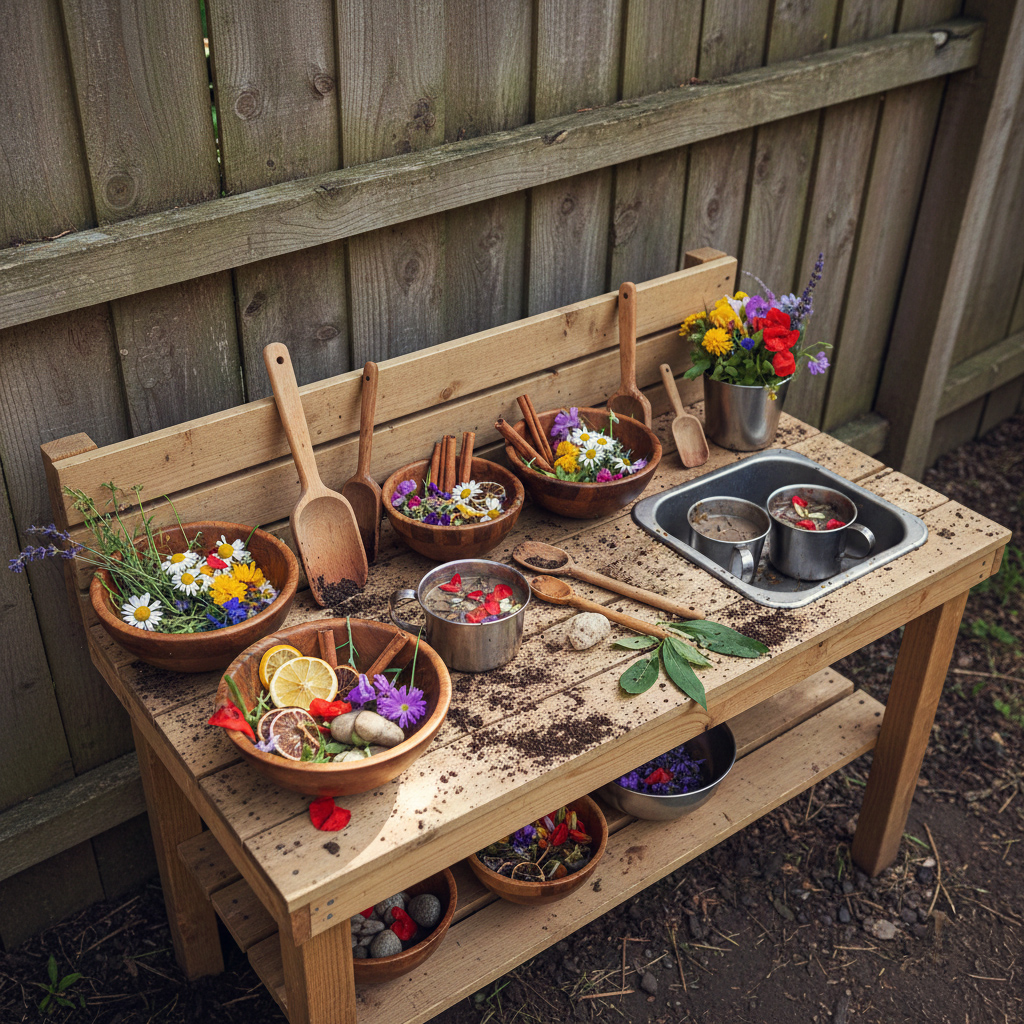
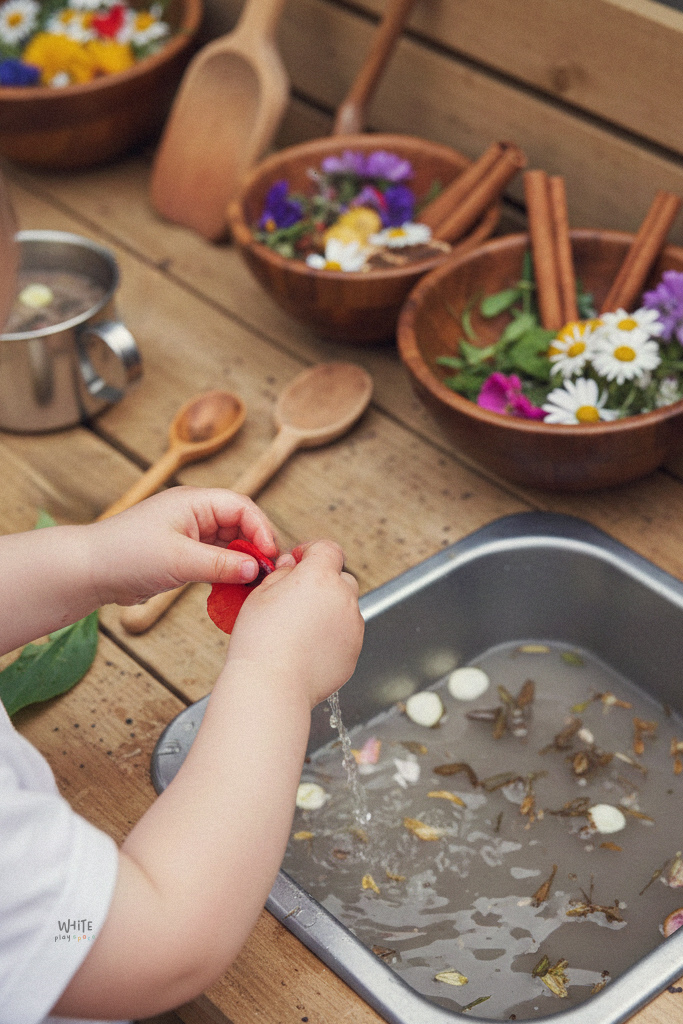
A calm, open-ended sensory invitation where children explore nature through hands-on play. Using flowers, citrus, and cinnamon, little ones stir, pour, and mix, discovering colors, textures, and scents at their own pace. This playful setup encourages creativity, problem-solving, and sensory learning while letting children lead their own experience.
Blossom Mud Kitchen
Age: 2–6 years
Theme: Blossom / Nature-Inspired Sensory Play
Materials
Sensory Base:
- Soil, mud, or sand (depending on indoor/outdoor setup)
Add-ins:
- Fresh or dried flowers
- Cinnamon sticks
- Dried lemon slices
- Dried orange slices
Tools:
- Wooden bowls
- Stainless steel mugs
- Wooden spoons
- Tongs, scoops, and other safe kitchen tools
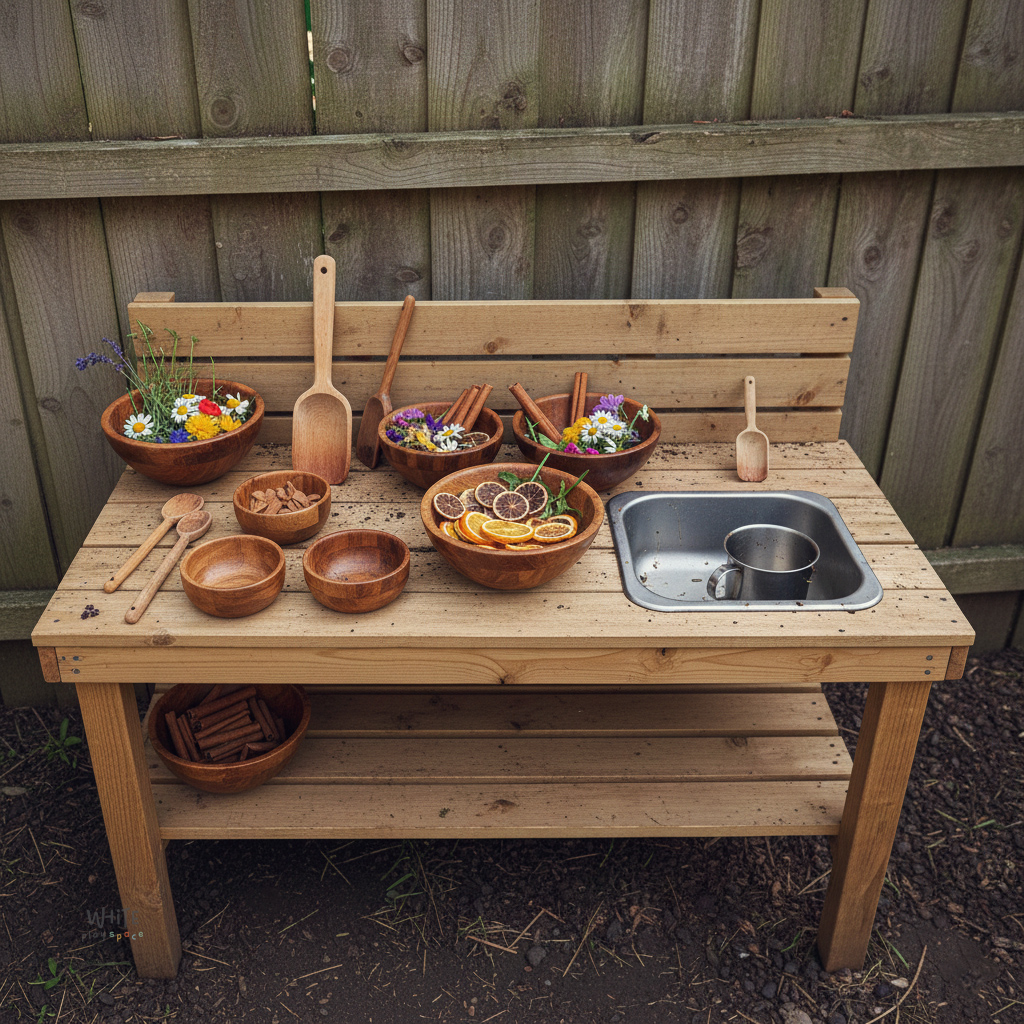
How to Set Up
- Prepare a mud or soil base in a tray or small outdoor area.
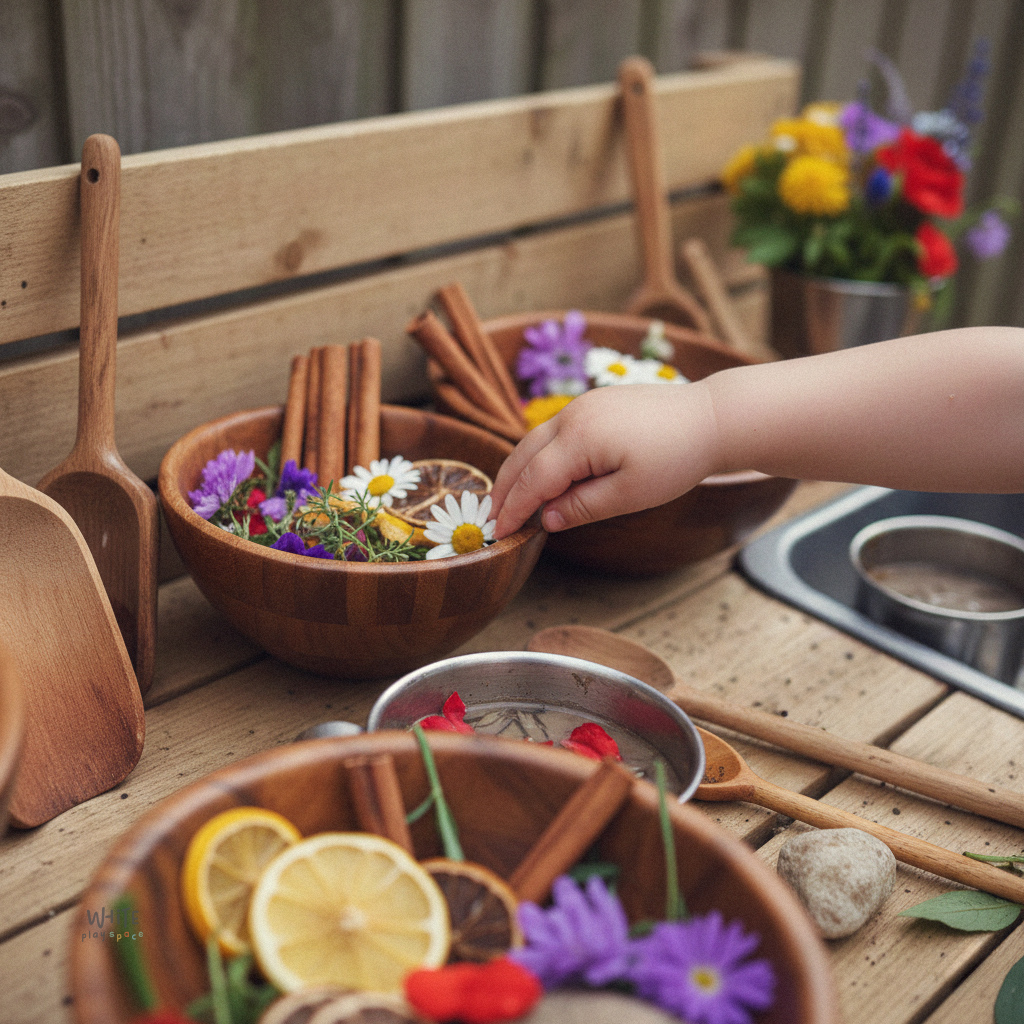
- Scatter flowers, citrus slices, and cinnamon sticks for texture, scent, and color.
- Provide tools within reach for scooping, stirring, pouring, and mixing.
- Encourage children to explore freely—there’s no right or wrong way to play.
Child-Led Exploration
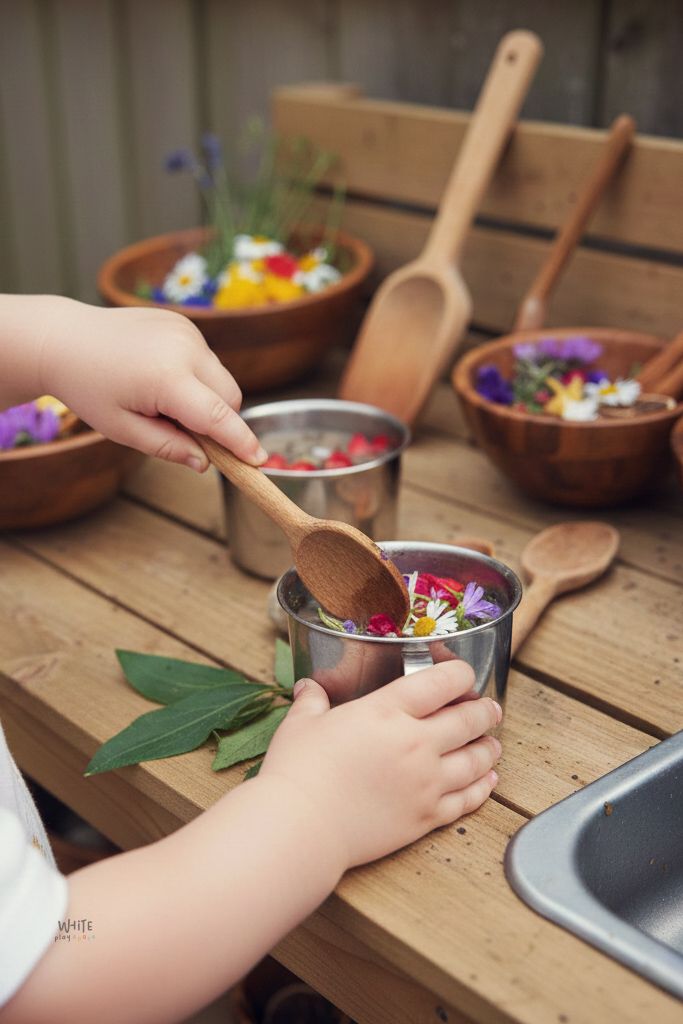
- Invite children to create “recipes,” mix scents, or layer materials.
- Encourage imaginative play: pouring, stirring, and arranging ingredients.
- Focus on sensory discovery, allowing children to notice smells, textures, and colors.
Prompt Ideas
- “Can you mix the flowers and citrus together?”
- “What does this smell like?”
- “Can you pour the soil into the bowl?”
- “What can you create with cinnamon sticks?”
Why It Matters
- Fine Motor Skills: Scooping, stirring, and pouring strengthen hand muscles and coordination.
- Sensory Awareness: Smells, textures, and colors stimulate multiple senses.
- Creativity & Imagination: Children invent, experiment, and create their own “recipes.”
- Problem-Solving & Planning: Arranging and layering materials develops thinking skills.
- Language Development: Talking about ingredients, actions, and observations builds vocabulary.
- Confidence & Independence: Child-led exploration fosters autonomy and curiosity.
Tips
- Allow children to lead the play and explore at their own pace.
- Use open-ended questions to expand thinking and language.
- Supervise younger children, especially under 3, for safe handling of small items.
- Encourage children to document their creations with photos or sketches if desired.