Cardboard Maze Installation Art
Age: 2–6 years
Approach: Child-led, open-ended process art
Materials
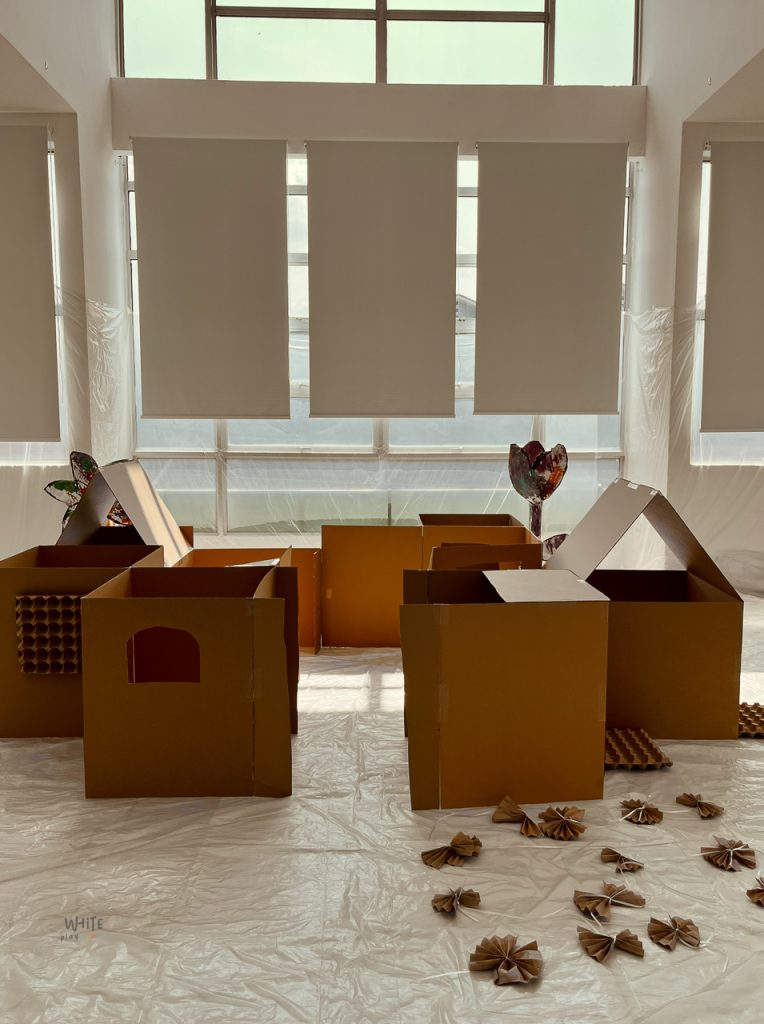
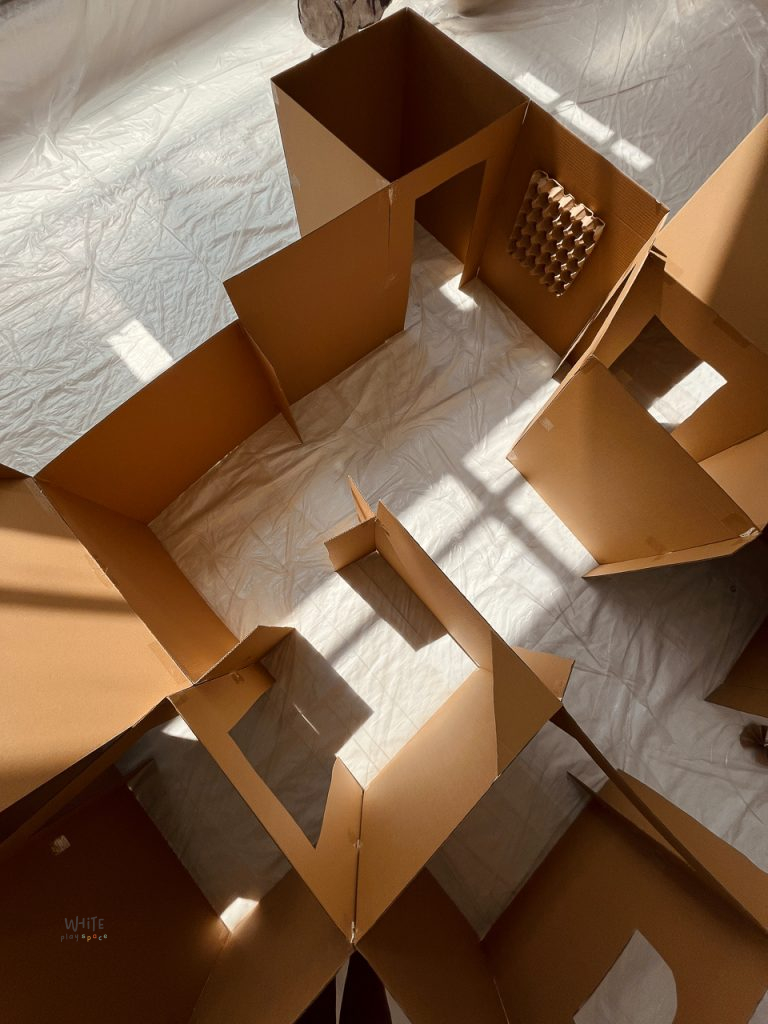
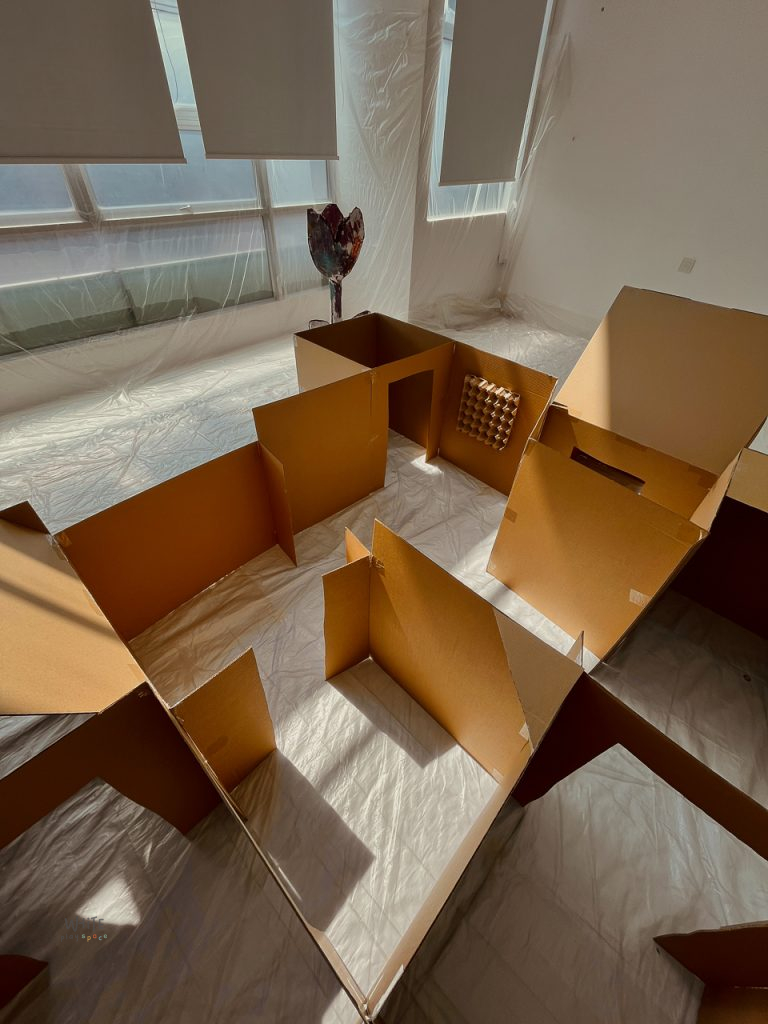
- Large cardboard pieces (for maze walls)
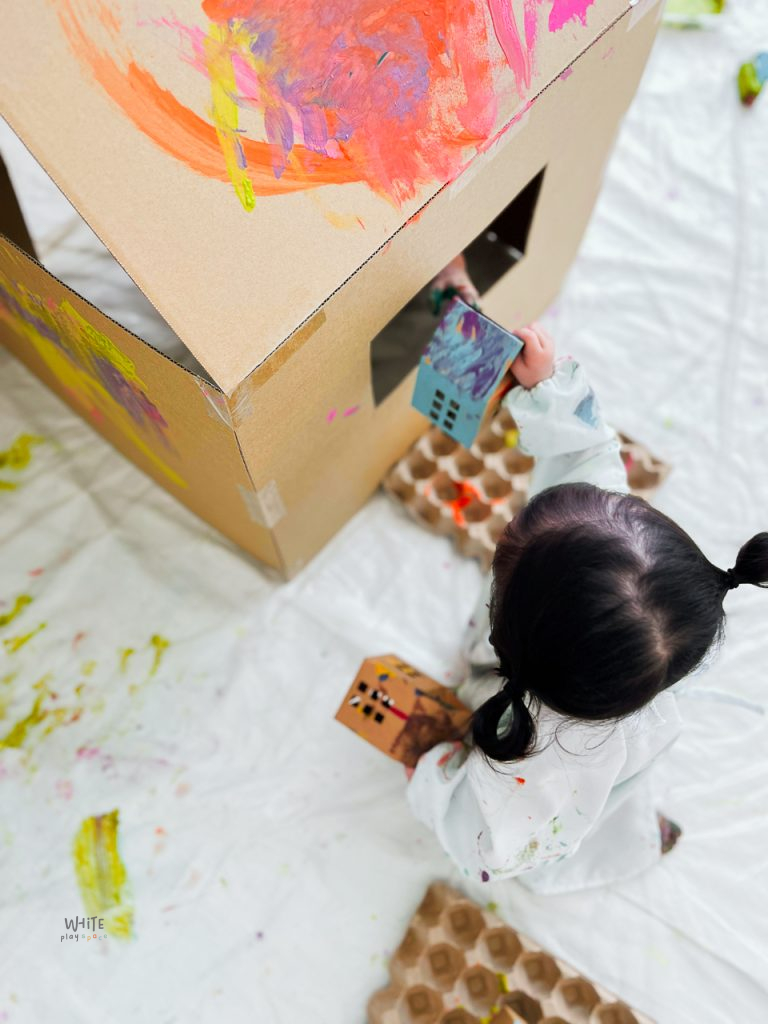
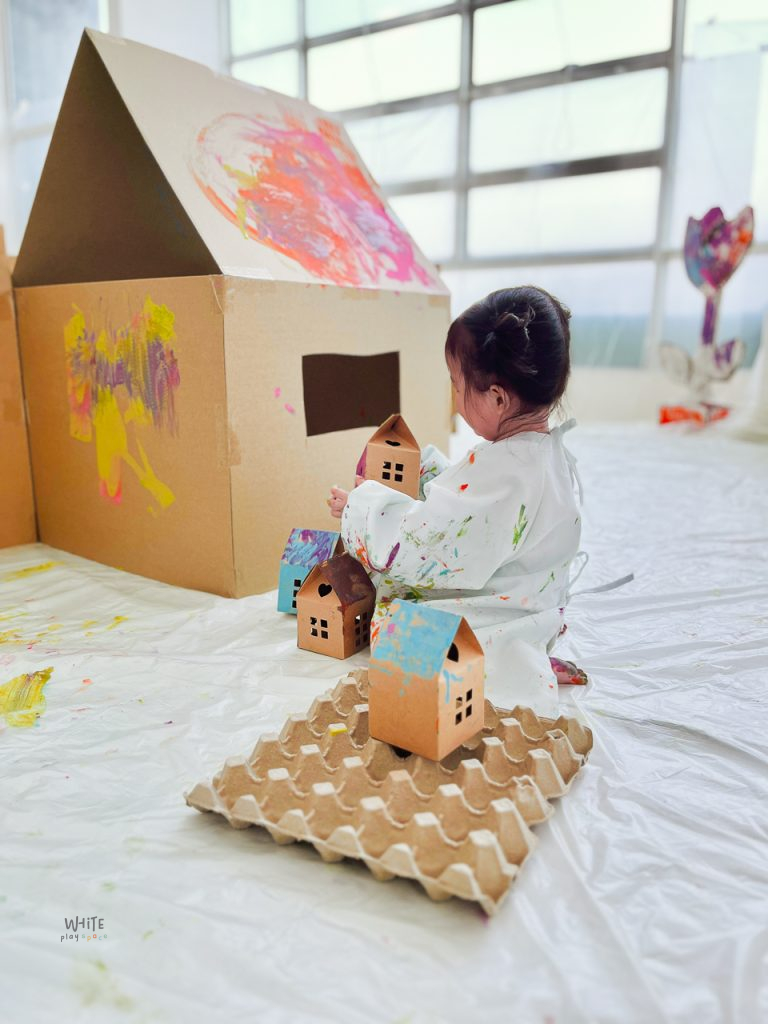
- Cardboard house
- Egg trays
- Tubes, bubble wrap, brown paper
- Paint brushes, sponges, rollers
- Tempera or watercolor paints
The Setup
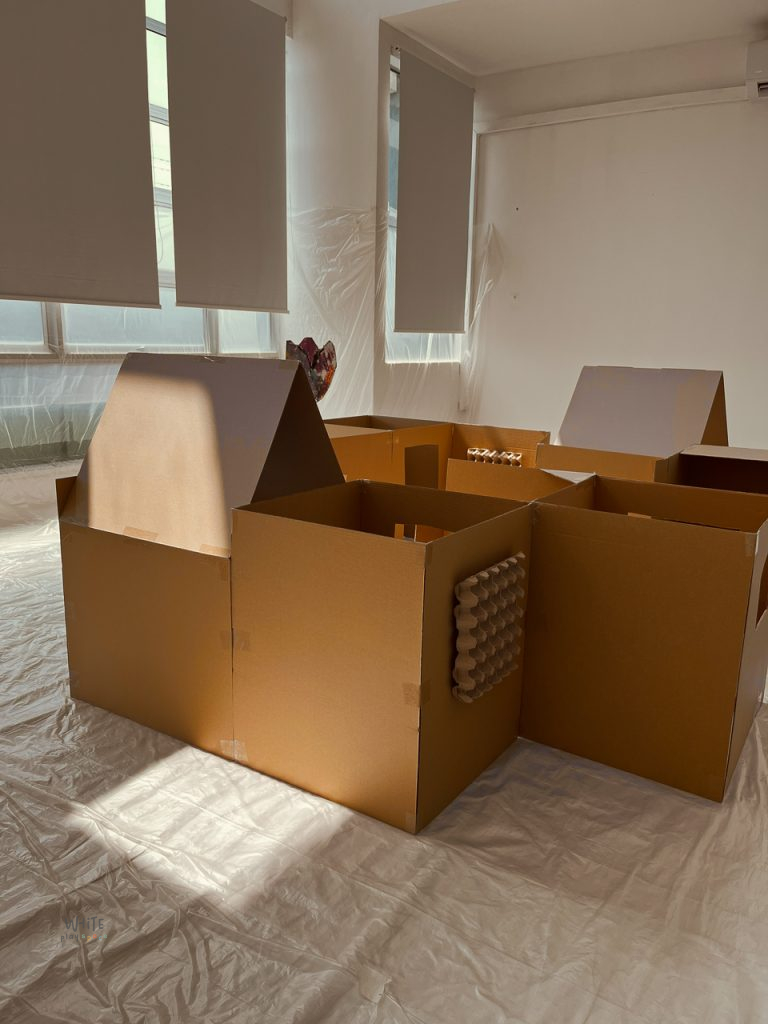
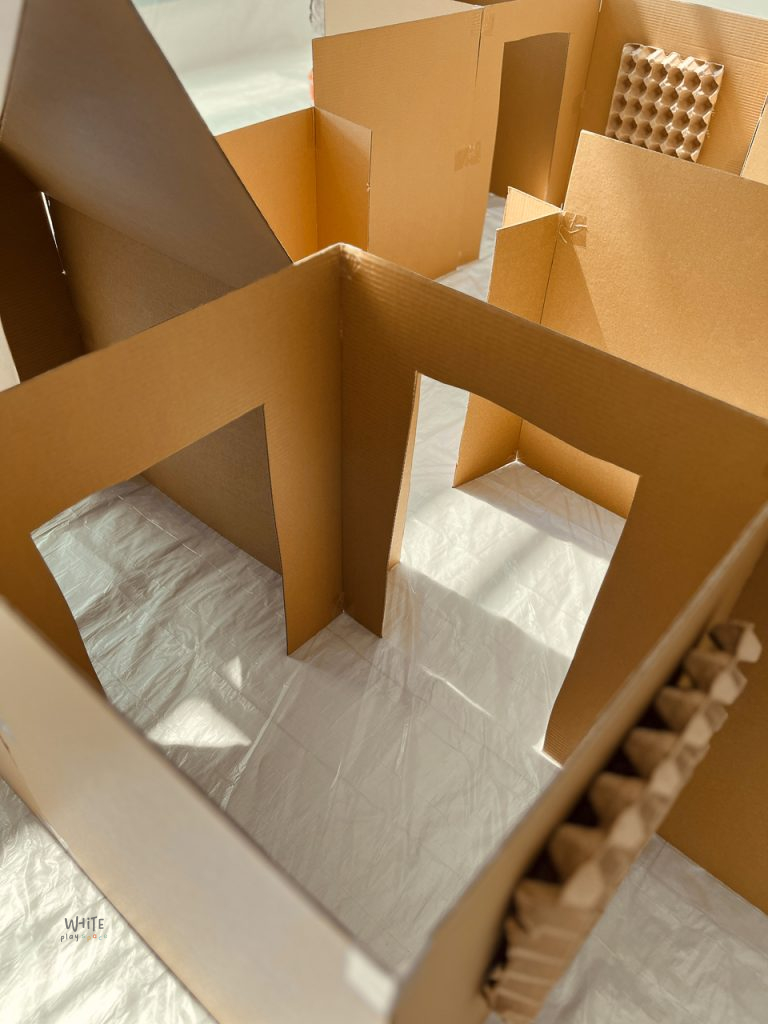
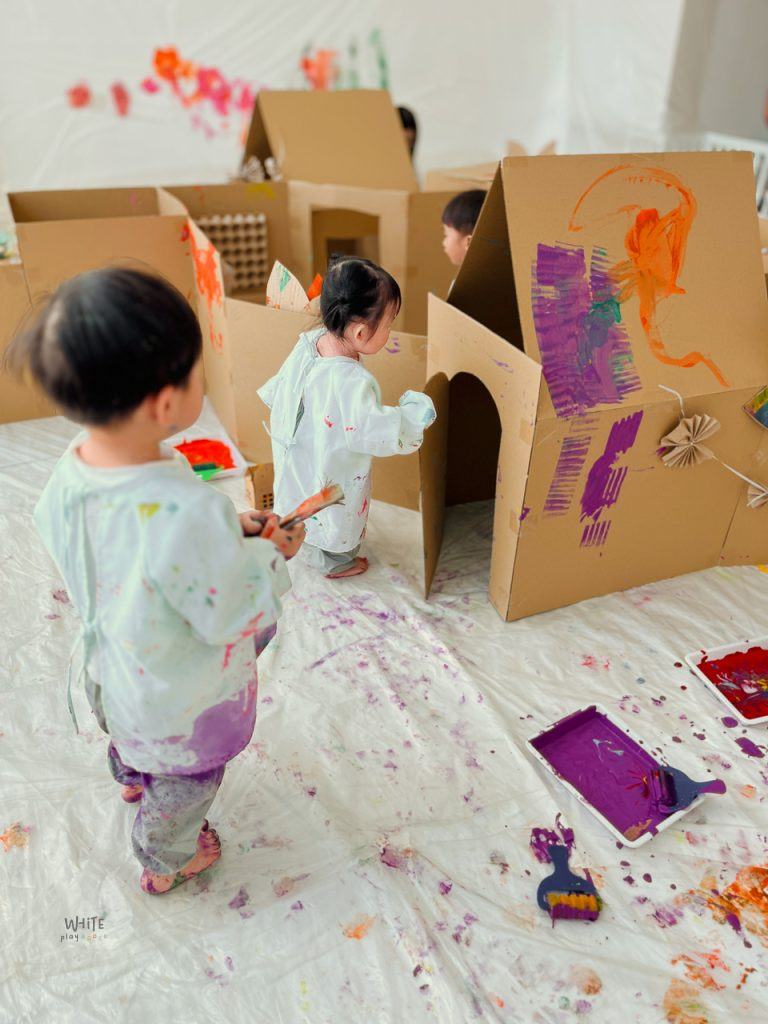
- Build a simple cardboard maze on a safe floor space, including pathways and corners for exploration.
- Place the cardboard house somewhere in the maze as a focal point.
- Add textured elements like egg trays, tubes, bubble wrap, or brown paper for extra surfaces to paint.
- Prepare paints, brushes, sponges, rollers and toy cars within easy reach.
What Children Learn
Children explore color, texture, and space through open-ended play. As they move through the maze, they build problem-solving skills, coordination, and spatial awareness. Painting and movement support fine and gross motor development, while sensory exploration and child-led choices build confidence, focus, and language.
Child-Led Process
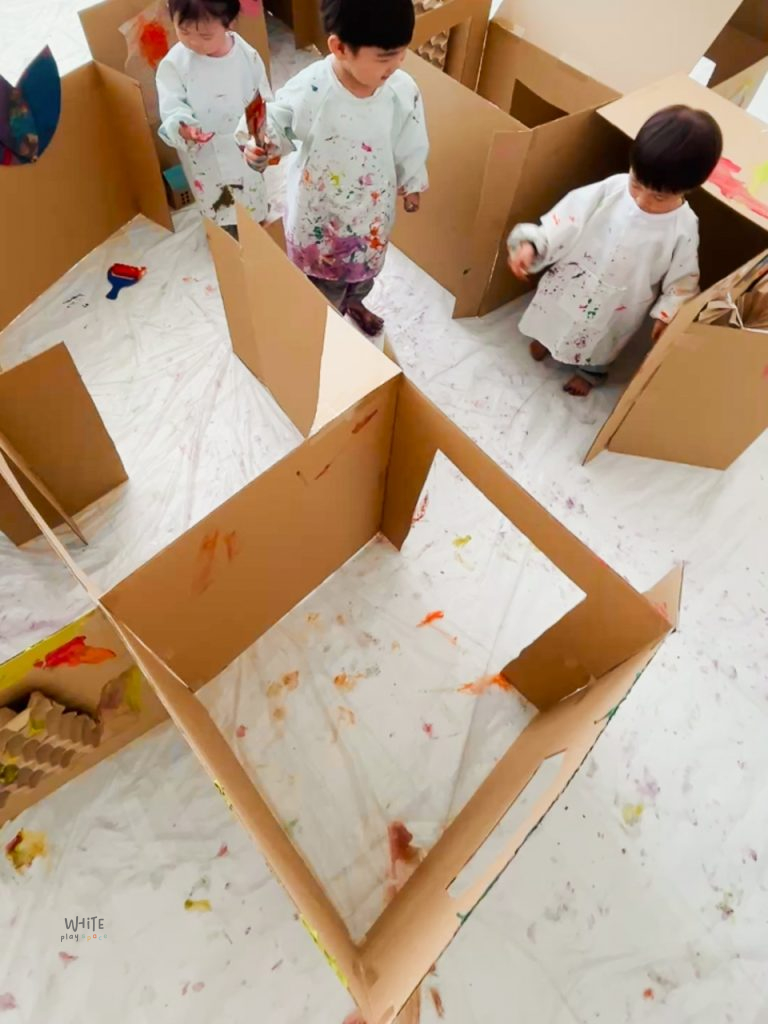
- Invite children to explore the maze freely.
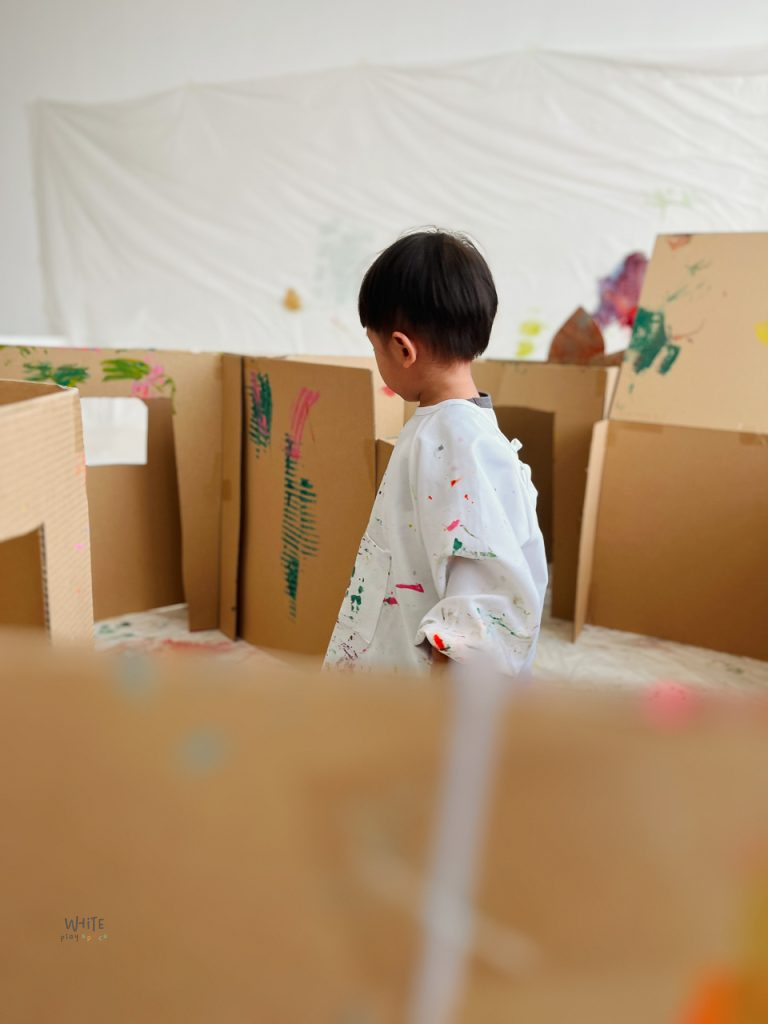
- Encourage painting the walls, house, and textures however they like.
- Let them find a path through the maze, incorporating movement, spatial awareness, and creativity.
- There is no right or wrong way—the focus is on exploration, process, and sensory engagement.
Why It Matters
- Creative expression: Children experiment with color, texture, and materials.
- Gross & fine motor development: Moving through the maze builds coordination; painting strengthens hand muscles.
- Problem-solving & spatial awareness: Navigating the maze encourages planning and exploration.
- Sensory engagement: Different textures, paints, and movement stimulate multiple senses.
- Focus & independence: Child-led, open-ended play fosters confidence and concentration.
Prompts to Ask Children
Use open-ended questions to support thinking and language without directing the outcome.
- “Where would you like to begin?”
- “Which path do you want to try?”
- “What happens if you paint here?”
- “How can you find your way through the maze?”
- “What do you notice about this texture?”
- “What could you try next?”
Tips
- Follow the child’s lead—observe before guiding.
- Focus on the process, not the finished look.
- Encourage exploration with gentle prompts rather than instructions.
- Allow children to revisit the installation over multiple sessions.