Natural Paint Brush
Process Art Exploration
Age:
Suitable for 4 – 6 years old
(Younger children may join with close adult assistance, especially during tying.)
This activity supports:
Creative experimentation
Fine motor coordination
Bilateral hand control (holding + tying)
Sensory awareness

Materials
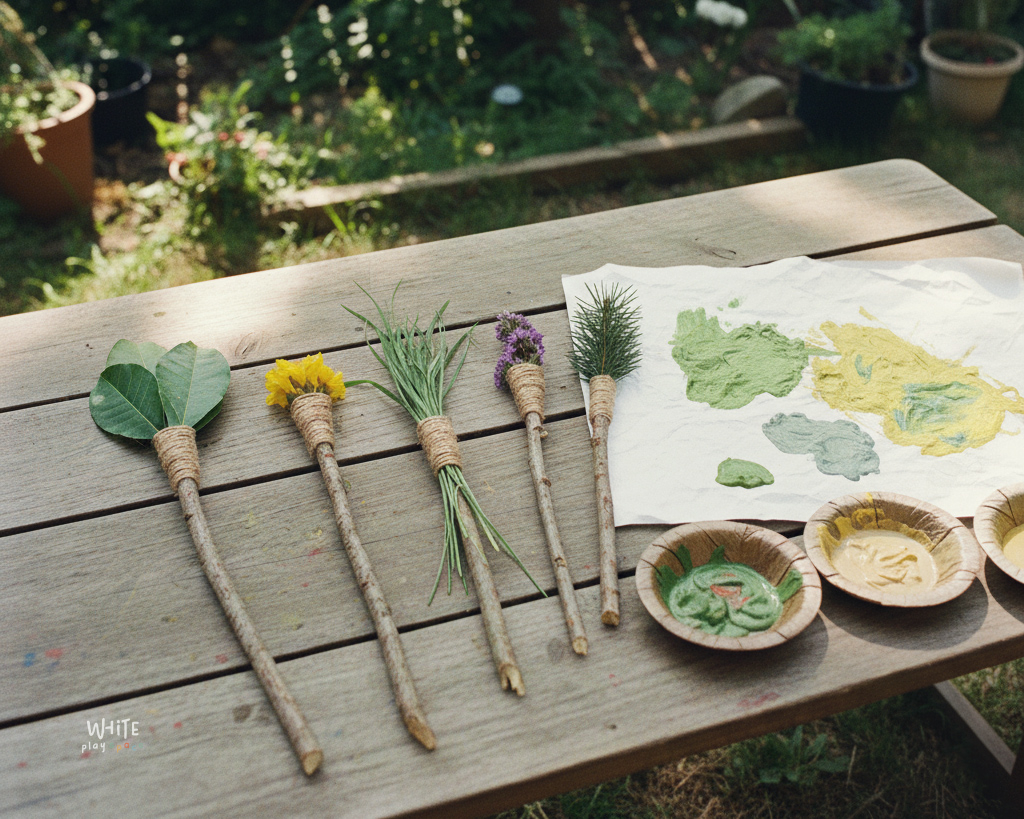
- Fresh leaves (varied shapes & textures), flowers, grasses
- Small branch sticks (handle size)
- Cotton string / raffia / rubber bands
- Washable, non-toxic tempera paint or watercolour paint
- Large art paper (A3 or larger)
- Aprons
The Setup
- Tables covered with protective sheet
- Leaves sorted by size and texture
- Pre-cut string prepared for easier handling
- Paint poured into shallow trays
- No sample artwork displayed
- Calm, guided but open-ended environment
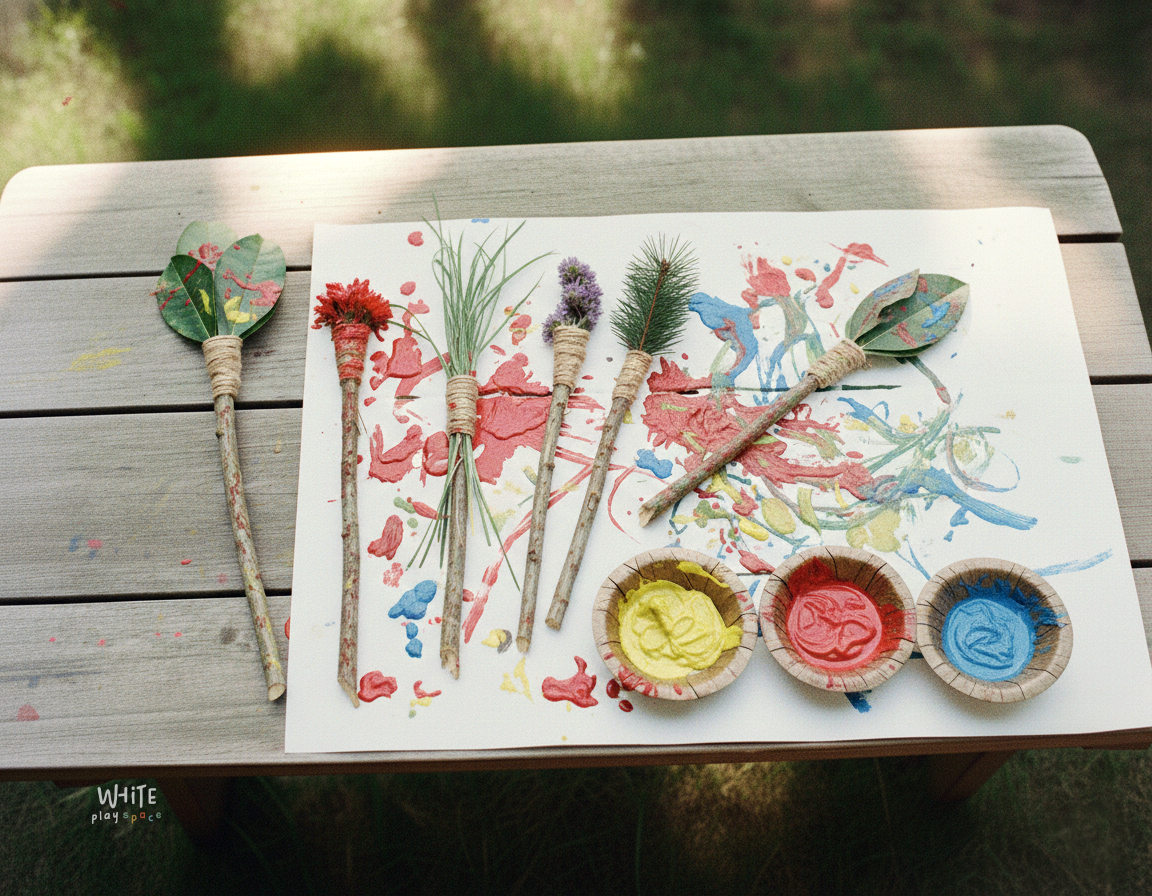
Each child will assemble their own natural brush tool before painting.
The Steps
1. Explore the Materials
Children observe and feel different leaves.
Discuss:
- Which leaf is soft?
- Which is thick or textured?
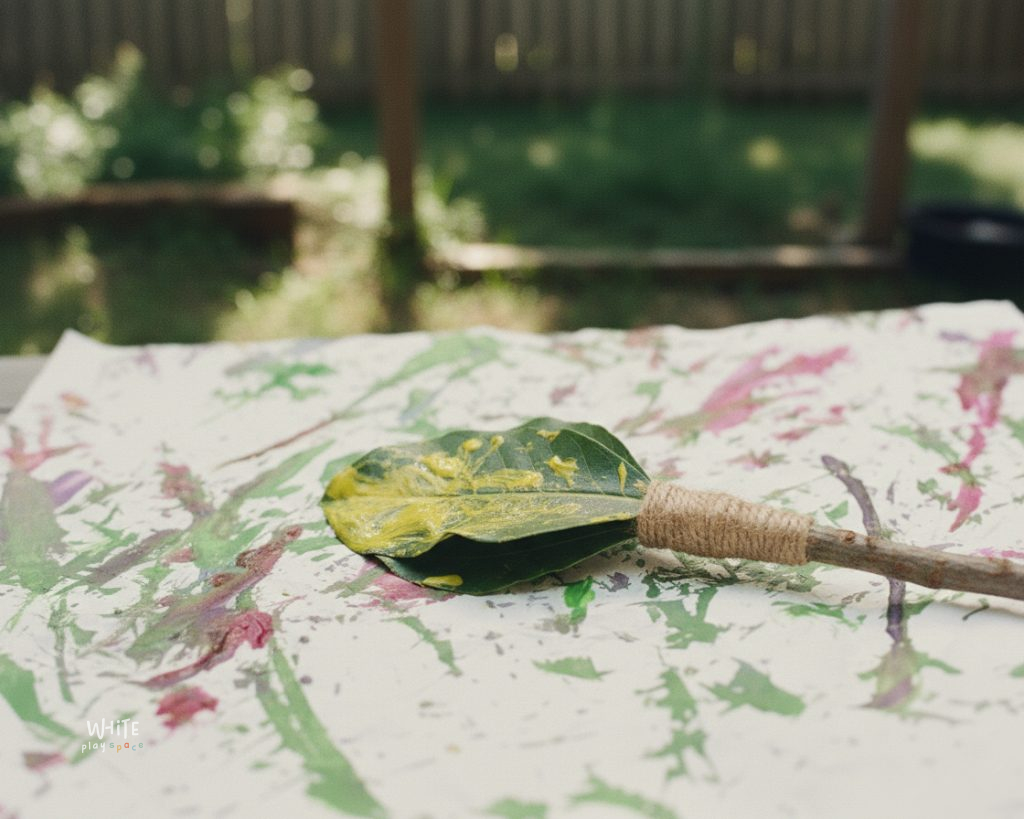
2. Create the Natural Brush
- Select a branch stick (handle).
- Choose 2–4 leaves.
- Arrange leaves at one end of the stick.
- Tie securely using string or rubber band.
Children create their own handmade painting tool.
(Adult guidance provided if needed.)
3. Painting Exploration
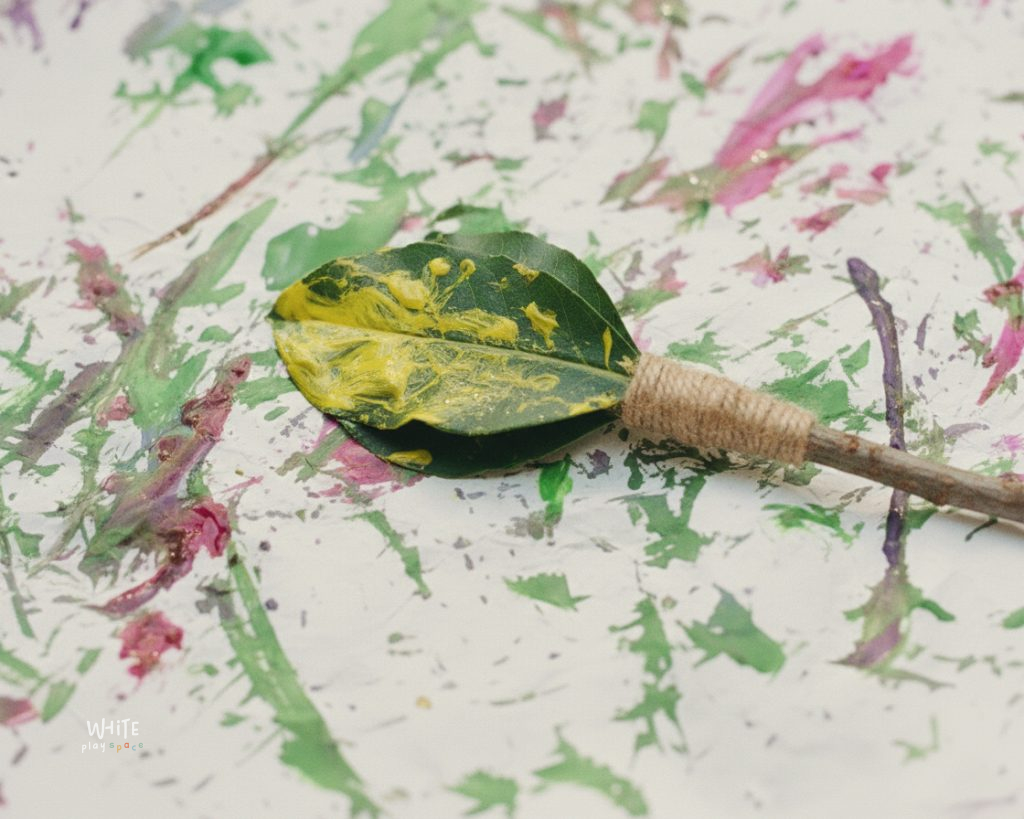
Dip the leaf-brush into paint and experiment:
- Pressing
- Dragging
- Twisting
- Dabbing
- Changing pressure
Observe how leaf texture creates unique marks.
4. Layer & Discover
Try different colors.
Overlap strokes.
Compare different leaf tools.
5. Reflection (Optional)
Short sharing:
- “How did your brush behave?”
- “What happened when you pressed harder?”
Why This Matters
This activity combines tool-making + process art, which strengthens:
- Fine motor skills (tying, gripping)
- Problem-solving (how to secure leaves)
- Cause-and-effect understanding
- Sensory exploration
- Creative confidence
Children learn that art tools don’t have to be bought — they can be created.
It encourages innovation, resourcefulness, and environmental awareness.
Prompts
- “What happens if you use more leaves?”
- “Does a bigger leaf make a different mark?”
- “What if you turn the brush sideways?”
- “How can you make thicker lines?”
Avoid outcome-focused comments. Emphasize exploration.
Note
- Suitable clothing recommended.
- Leaves may tear during use — this is part of the exploration.
- Focus is on experience and experimentation, not final artwork perfection.