Nature & Wonder
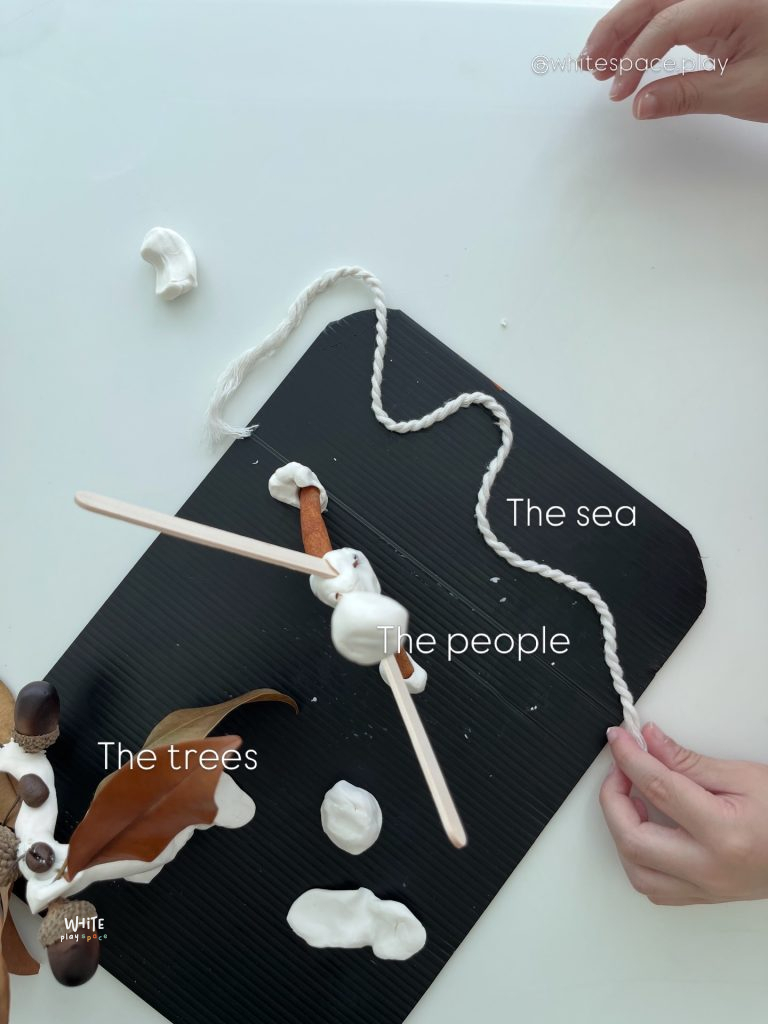
A sensory-rich, open-ended art play session using white clay or playdough alongside an array of natural loose parts. Children explore how physical pressure creates patterns and impressions, using their hands with 100% freedom of play to transform raw elements into their own imaginary landscapes—shaping trees, people, or the sea based entirely on what they see and imagine.
Age Group: 4–6 Years Old
Materials
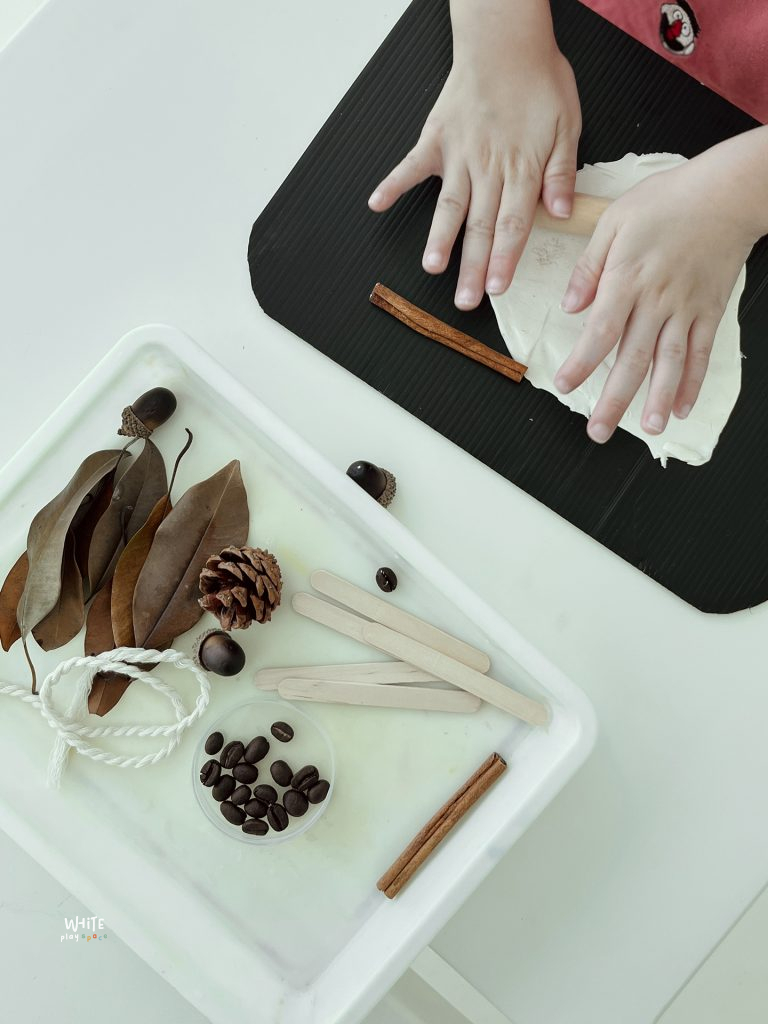
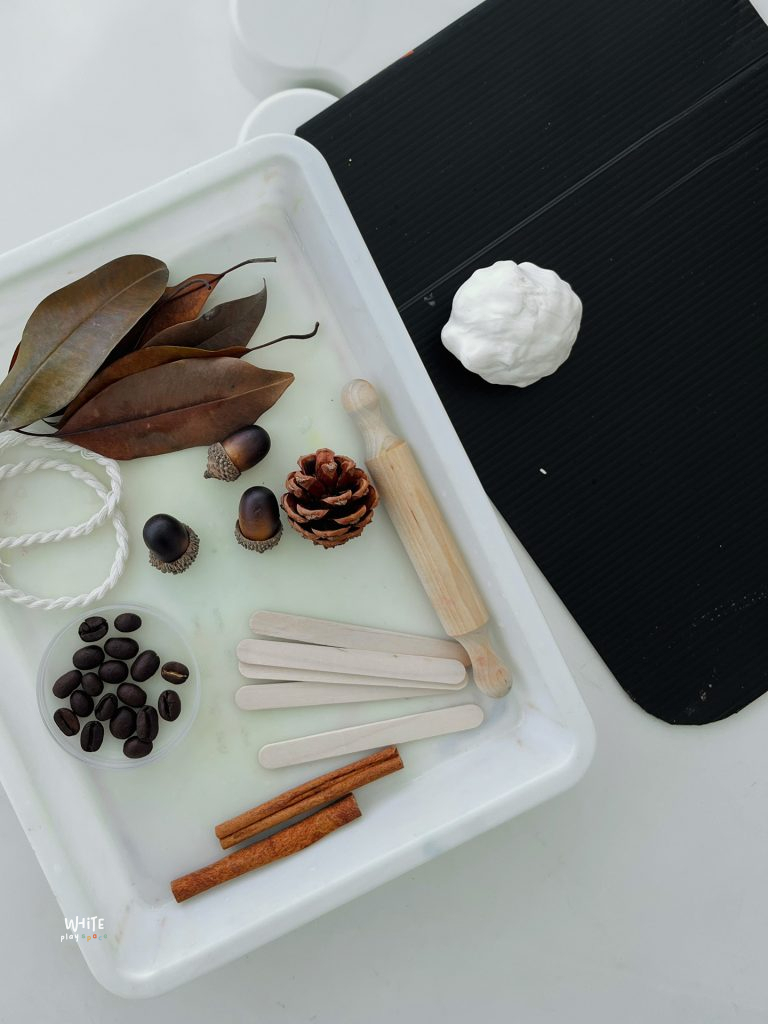
Base: White clay or white playdough
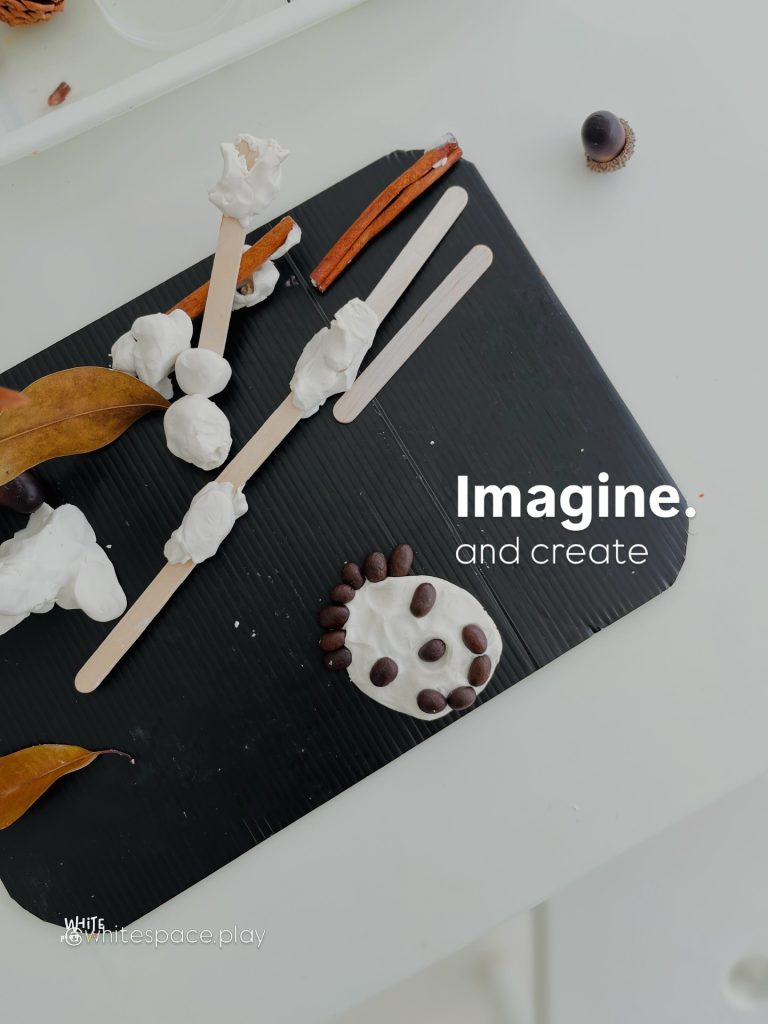
Loose Parts: Dried leaves, pinecones, cinnamon sticks, wood sticks, seeds, coffee beans, lentils, chickpeas
Tools: Wooden rolling pins
Display/Base: Thick cardboard
Steps
1. Sensory Mystery Box
Place different natural loose parts inside an opaque bag. Have the child reach in without looking to feel, guess, and describe the textures (bumpy, rough, smooth).
2. Flattening the Earth
Give the child a ball of white clay or playdough on the thick cardboard. They smash it with their palms and use the wooden rolling pin to flatten it into a smooth canvas.
3. Pressing Textures
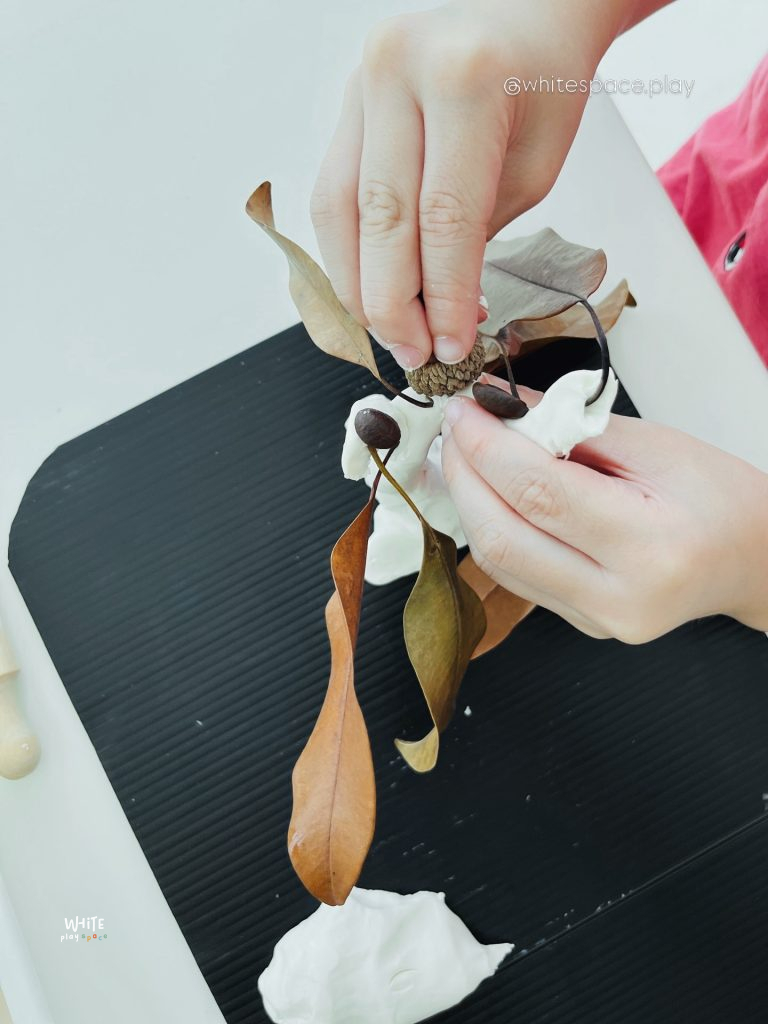
Children firmly press textured natural items (like leaves and pinecones) into the smooth white surface, then carefully peel them back to reveal the hidden “fossil” prints.
4. Freedom 3D Art Play
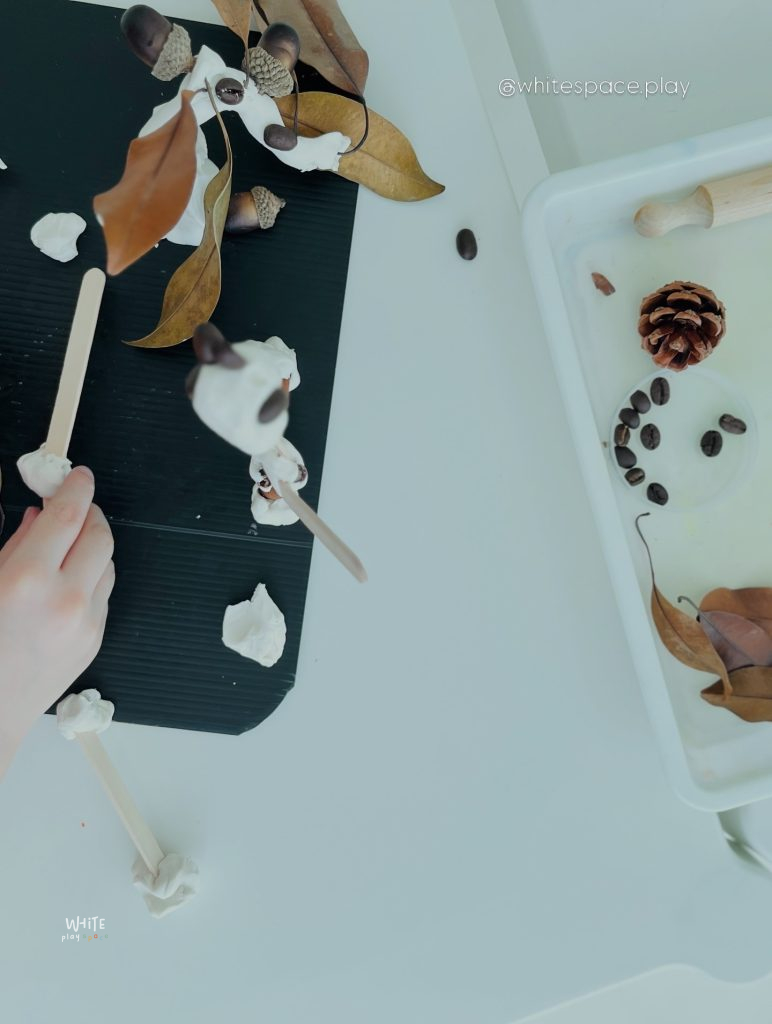
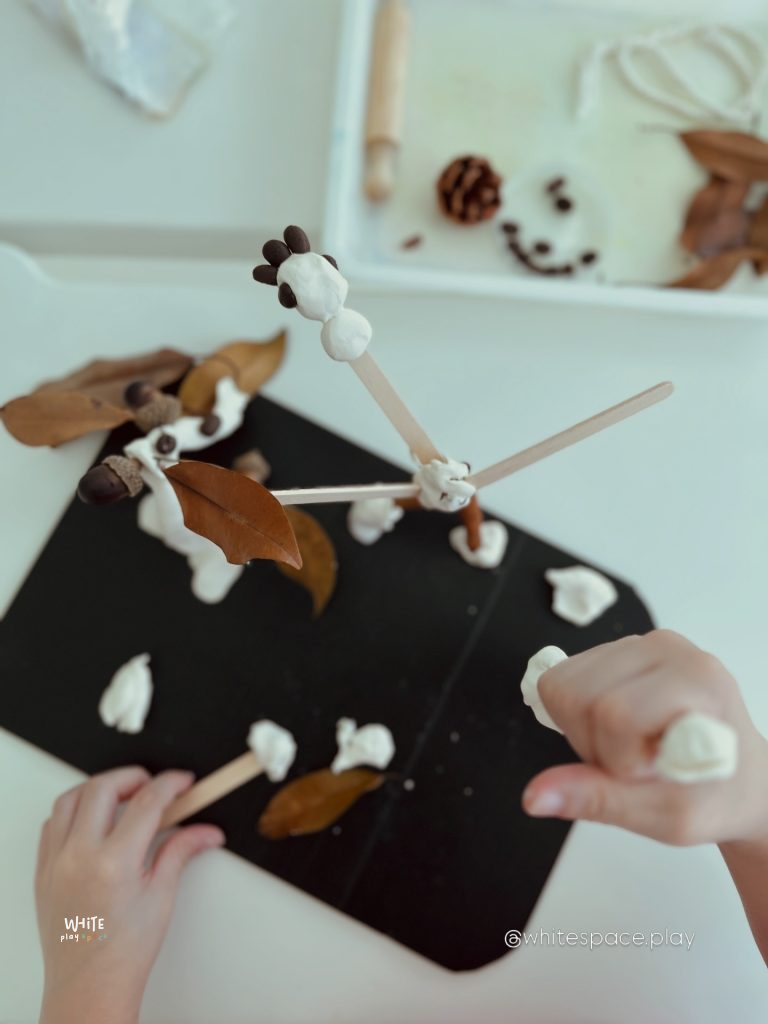
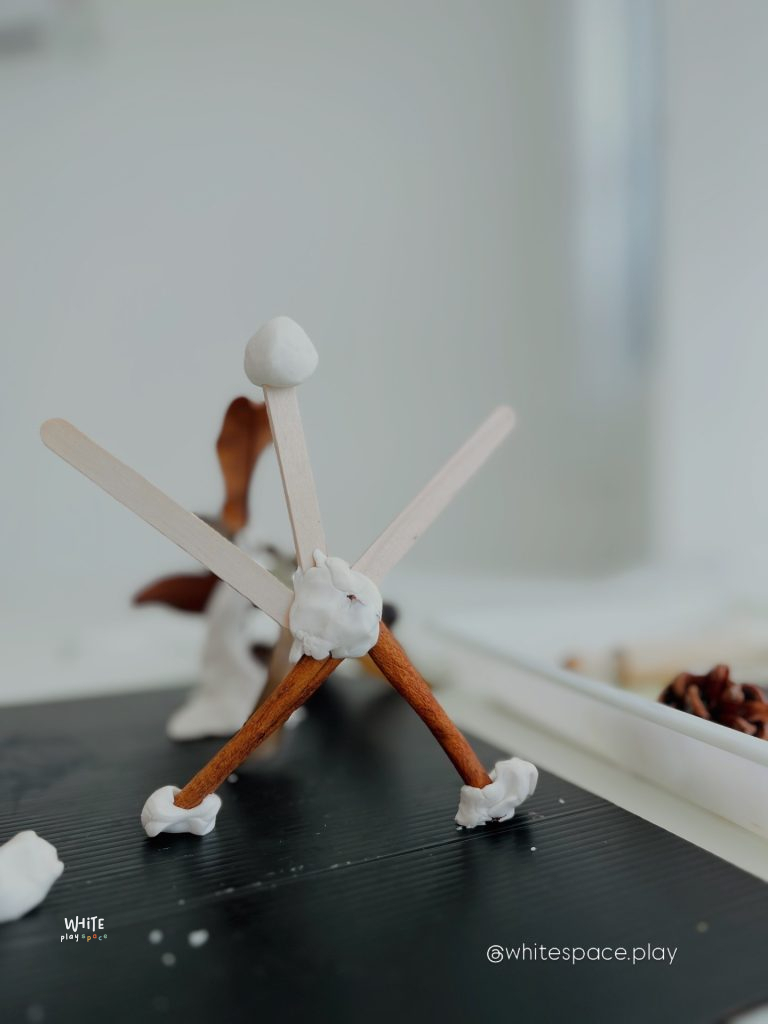
Children take total control to build upward. They push wood sticks in for trees, shape clay spheres for people, and embed coffee beans or lentils to map out a sea or land path.
5. Showcase & Reset
Give the child an imaginary magnifying glass to present their mini world and share its story. Cleanup is quick: loose parts return to baskets and the tray is wiped clean.
Why This Matters
Abstract & Symbolic Thinking: Turning a vertical wood stick into a “tree” or a coffee bean into a “human” is a major cognitive leap required for reading and language.
Reggio Problem-Solving: Beautifully sorted, open-ended materials without a sample model to copy challenge the child to explore weight, balance, and physical pressure on their own terms.
Tactile Grounding: Heavy work (smashing and rolling) combined with color-free white clay helps 4-6 year olds regulate energy and focus entirely on form and depth.
Prompts to Ask the Children
- Step 1: “Without looking, what does your hand feel? Is it bumpy, cold, rough, or smooth?”
- Step 3: “Look at the pattern your leaf left behind! What does that texture remind you of?”
- Step 4: “Where are your people traveling to across this path of lentils and coffee beans?”