Self Portraits
A self-portrait exploration where children observe themselves using mirrors and printed photos, then express their identity through paint, loose parts, cardboard, and sensory materials. Across different activities, they explore how facial features, emotions, and expressions can be represented in many creative ways using color, texture, and form. The experience supports observation, creativity, fine motor skills, and a developing sense of self.
Suitable for children aged: 4–5 years old.
Not recommended for toddlers or children under 3 years old due to the use of small loose parts that may pose a choking hazard.
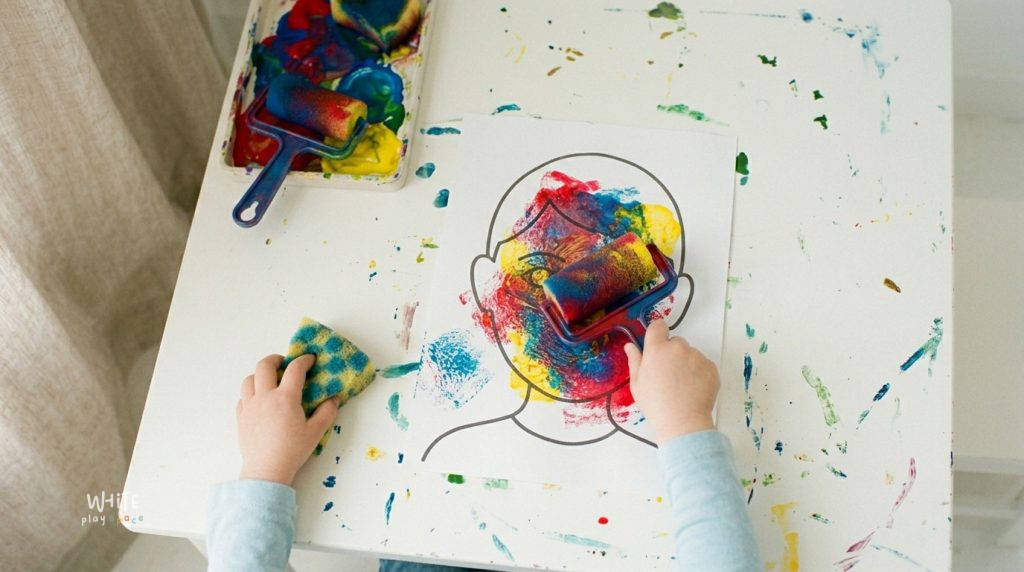
1. Process Art — Roll & Print Self Portraits
Children explore colors, textures, and mark-making while creating expressive self-portraits.
Materials
- Face outline template or photo
- Paint rollers
- Dot stampers
- Sponges
- Washable paint
- Large paper
Exploration
Children roll, stamp, dab, and layer colors to create hair, skin tones, clothes, and facial expressions.
Steps
- Show children a face outline or blank paper.
- Let them look in the mirror first.
- Provide rollers, sponges, and paint.
- Children paint freely to create hair, skin, and features.
- Encourage layering and mixing colors.
- Let artwork dry and talk about what they made.
Prompts
- “What colors would you choose for yourself?”
- “How does your hair move?”
- “Can you make soft or bumpy textures?”
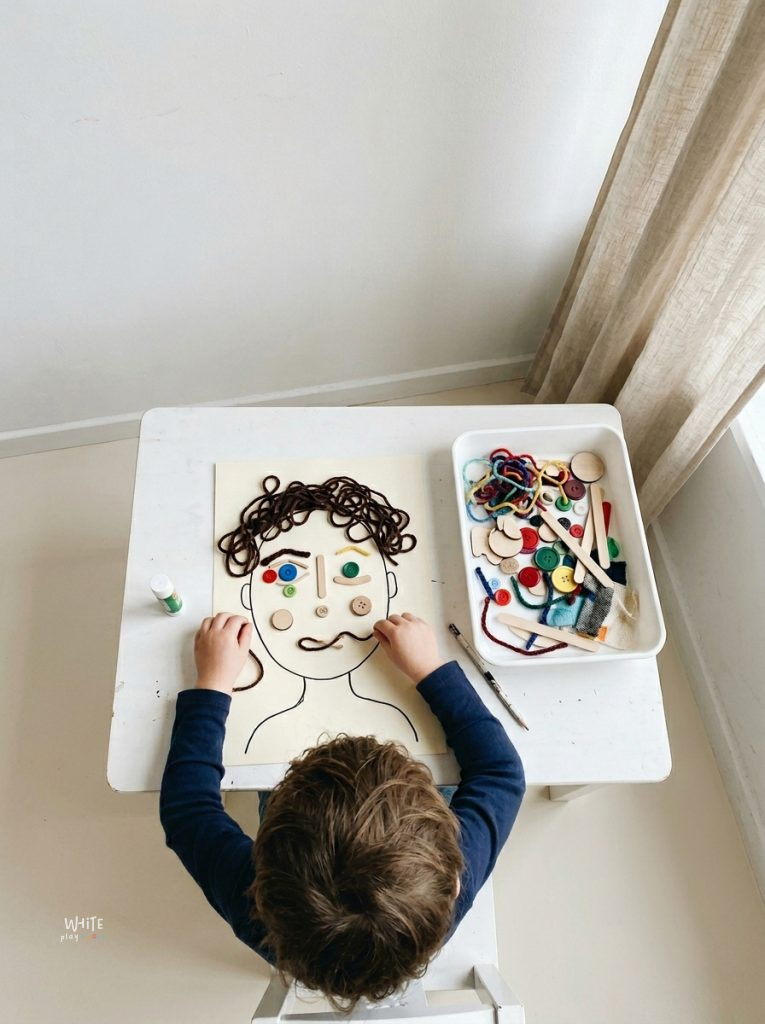
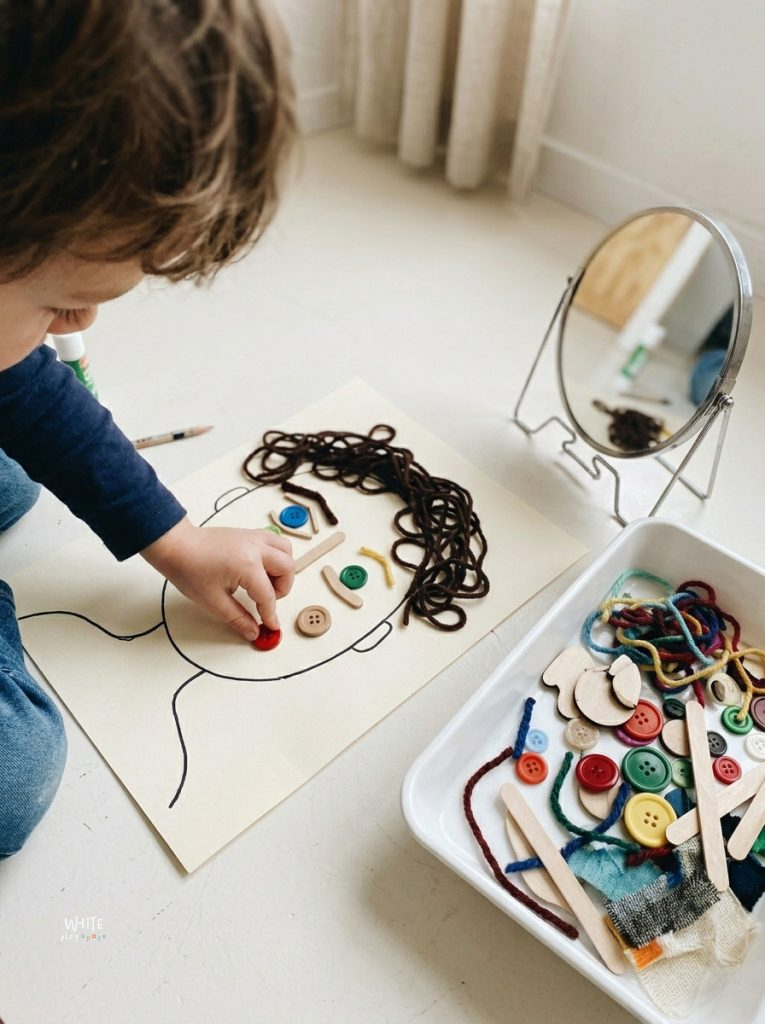
2. Reggio Emilia Inspired — Loose Parts Self Portraits
Children create self-portraits using mirrors, loose parts, and observation.
Materials
- Mirrors
- Black-and-white self photo or face outline
- Yarn
- Buttons
- Fabric scraps
- Wooden loose parts
- Pebbles
- Corks
Exploration
Children observe their facial features and represent themselves using materials.
Steps
- Give each child a mirror and printed face/photo.
- Ask them to observe their face carefully.
- Children choose loose parts to match facial features.
- Place materials on the face/photo to build their portrait.
- Adjust and change freely.
- Invite children to describe their creation.
Prompts
- “What makes your face unique?”
- “Which material could become your hair?”
- “How can you show your expression?”
3. Art Play — Build My Face
Children create large playful faces using open-ended art materials.
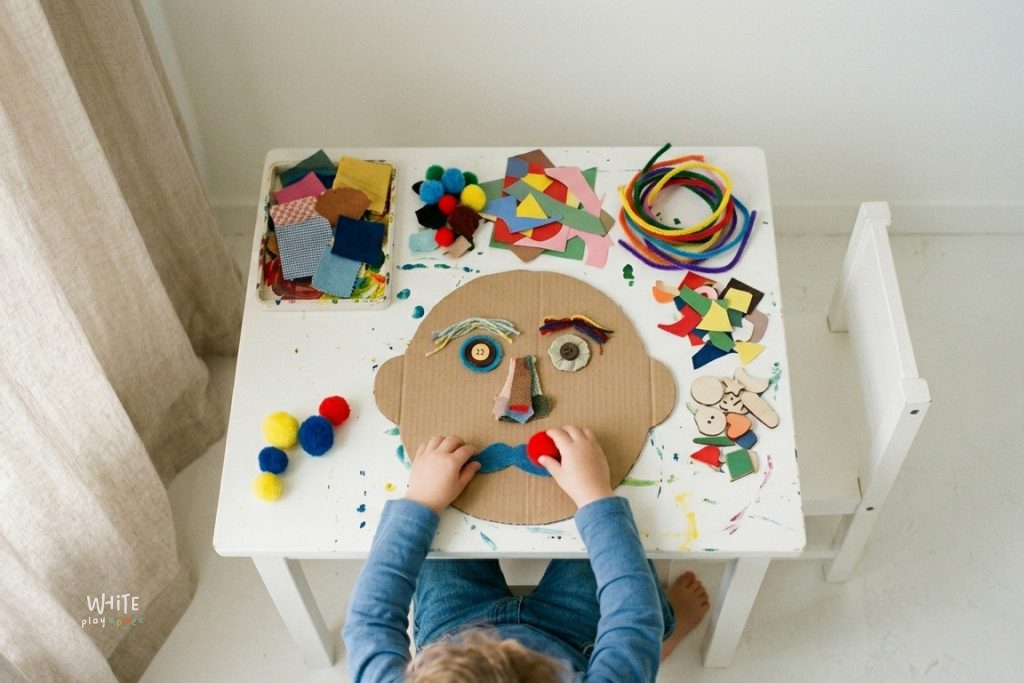
Materials
- Cardboard face base
- Colored paper
- Fabric
- Pom poms
- Pipe cleaners
- Stickers
- Masking tape
Steps
- Give children a cardboard face base.
- Show a variety of colorful materials.
- Children choose materials to design their face.
- Add hair, eyes, mouth, and decorations.
- Encourage imaginative or funny expressions.
- Share and display finished faces.
Exploration
Children design imaginative versions of themselves:
- silly hair
- giant eyes
- colorful emotions
- fantasy self portraits
Prompts
- “What would your dream hairstyle look like?”
- “Can your face show a funny feeling?”
- “What happens if you change the shapes?”
4. Sensory Play (Less Mess) — Face Salon Tray
A calming fine-motor sensory setup where children create faces using tactile materials.
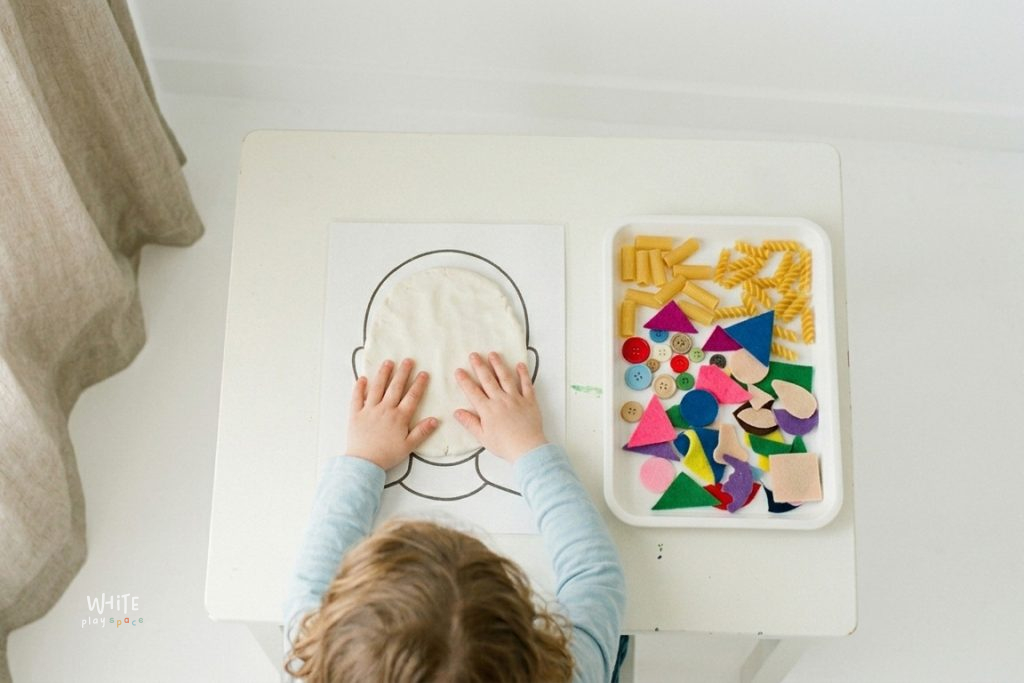
Materials
- Playdough mats with face outlines
- Dry pasta
- Felt pieces
- Yarn
- Buttons
- Wooden tools/tweezers
Exploration
Children press, place, arrange, and redesign facial features on the mats.
Steps
- Prepare playdough face mats or simple face outlines.
- Place dry sensory materials in small trays.
- Children use hands or tools to pick materials.
- Press and place items onto the face.
- Change features to create different expressions.
- Clean-up together by sorting materials back.
Focus
- sensory exploration
- fine motor skills
- emotional expression
- hand strength
Prompts
- “Can you make a happy face?”
- “What happens when you change the eyebrows?”
- “How does this face feel?”
Printable face outline available to download here: