
Turmeric Sun Printing
Turmeric sun printing (a natural form of anthotype photography) uses the light-sensitive compound curcumin in turmeric to create prints using sunlight.
Age Group: 4–6 Years Old


Materials & Tools
Turmeric powder: 2-3 tablespoons
Rubbing alcohol (70% IPA): ~½ cup (water works if alcohol isn’t available, but alcohol dries much faster and gives richer color)
Heavy paper: Watercolor paper or cardstock works best
Objects to print: Leaves, flowers, flat keys, lace, or paper cutouts
Picture frame with glass/acrylic: Or a piece of clear plastic/glass and a stiff cardboard backing
Tools: Paintbrush or sponge, shallow bowl or jar, binder clips or clothespins

Setup & Steps
Set up an indoor workspace, away from direct sunlight.
Cover the work surface with newspaper or an old plastic tablecloth—turmeric stains surfaces, clothes, and skin easily.
1. Mix the Emulsion
Adult supervision recommended for handling alcohol.
In a bowl, mix 2-3 tablespoons of turmeric powder with ½ cup of rubbing alcohol. Stir thoroughly until the liquid turns a deep golden orange.
2. Coat the Paper
Brush the turmeric mixture evenly across your watercolor paper. Apply 2-3 light coats, letting the paper dry briefly between layers. Work indoors away from sunny windows.
3. Dry in the Dark
Place the coated paper in a dark room or drawer for 10-15 minutes until it is completely dry to the touch.
4. Arrange Objects & Secure
Lay your paper flat, place your chosen objects (leaves, cutouts, lace) on top, and place the clear acrylic over them. Use binder clips around the edges to press everything flat against the paper so no light leaks under the shapes.
5. Expose in Direct Sunlight
Carry the frame outside and place it in direct sunlight. Leave it exposed for 1 to 3 hours. The yellow background will gradually fade to a lighter, pale yellow as the sun breaks down the turmeric dye.
6.Reveal the Print
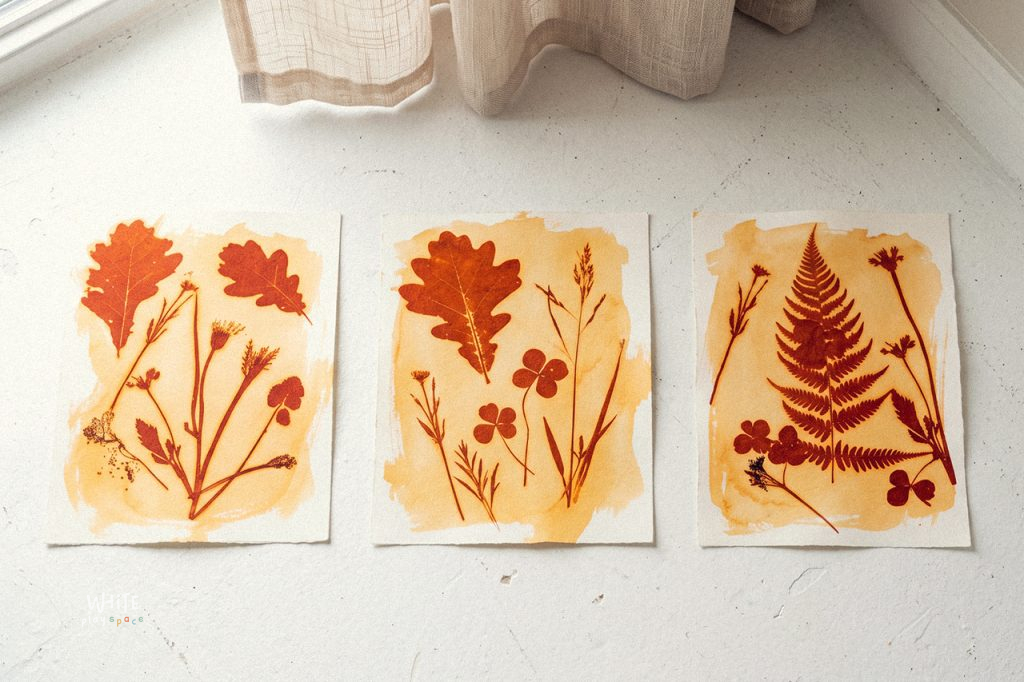
Bring the frame back indoors, remove the glass, and lift off your objects. The areas covered by the objects will remain bright yellow, while the exposed background will be faded.

Prompts for Learning & Discussion
- Observation: “Look closely at the print. Which parts stayed dark yellow, and which parts faded? Why do you think that happened?”
- Science Connections: “Turmeric contains a compound called curcumin. What do you think the ultraviolet (UV) rays from the sun did to it?”
- Experimentation: “What happens if we leave one print in the sun for 30 minutes and another for 3 hours? Which one will have a stronger contrast?”
- Design Thinking: “Why did flat objects like thin leaves work better than round or bumpy objects like rocks or pinecones?”